

As the landscape of cloud computing continues to evolve at a breakneck pace, this week’s announcements from Amazon Web Services (AWS) highlight a significant shift toward two critical frontiers: the expansion of high-performance programming languages into edge computing and the deep integration of next-generation generative AI models into enterprise workflows. From the general availability of the AWS IoT Device SDK for Swift to the deployment of OpenAI’s most advanced models on Amazon Bedrock, developers and enterprises alike have a robust new set of tools at their disposal.
Main Facts: A New Era for Edge and Intelligence
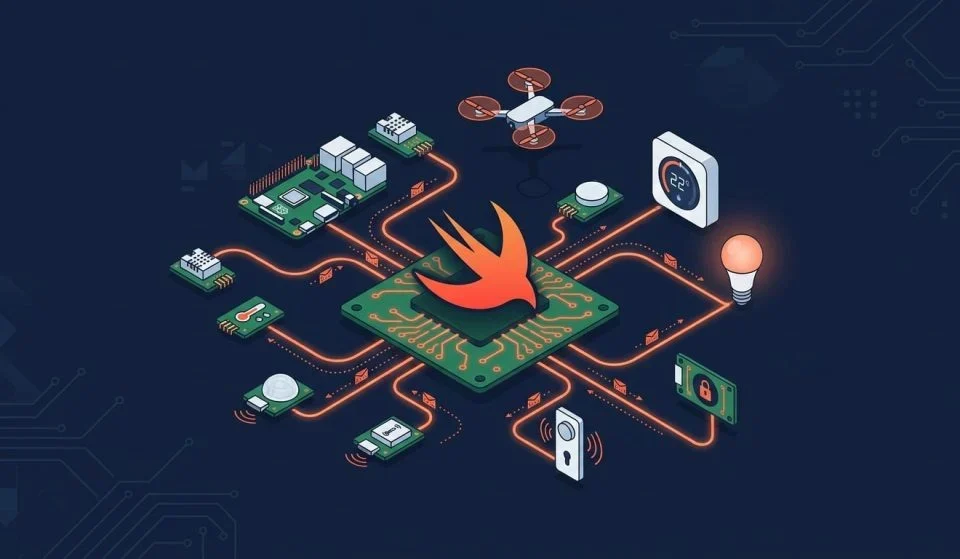
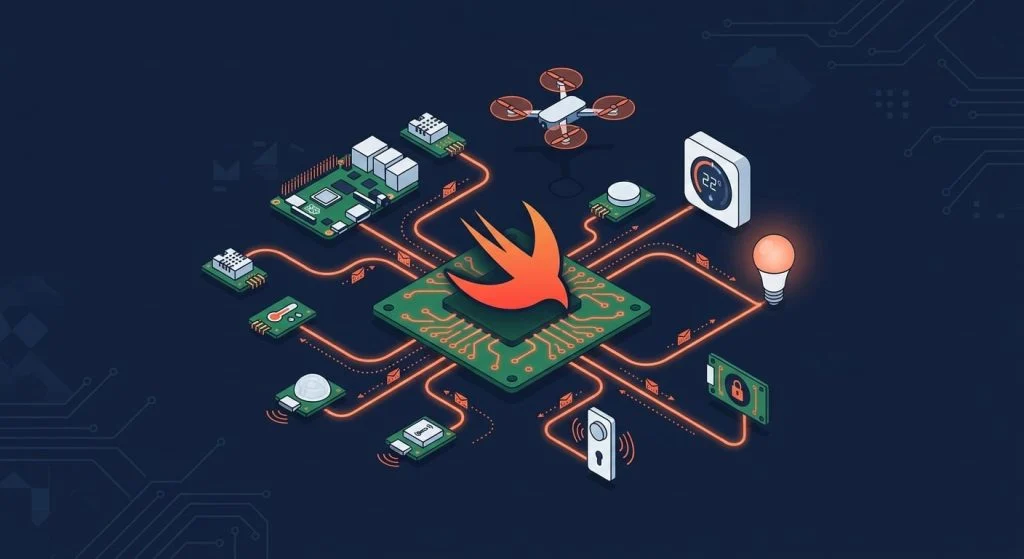
The highlight of the week is undoubtedly the general availability (GA) of the AWS IoT Device SDK for Swift. This development marks a maturation point for the Swift programming language, which is increasingly shedding its reputation as being strictly for iOS development to become a versatile, performant option for server-side and edge-device applications. By supporting MQTT 5, Device Shadow, Jobs, and fleet provisioning on macOS, iOS, tvOS, and Linux, AWS is signaling a shift toward more memory-safe and efficient codebases for IoT hardware.
Simultaneously, the enterprise AI sector received a massive boost with the general availability of OpenAI’s GPT-5.5, GPT-5.4, and the Codex coding assistant on Amazon Bedrock. This integration provides businesses with a secure, governed environment to deploy cutting-edge autonomous agents and AI-assisted development tools without compromising on data sovereignty or operational control.
Finally, infrastructure management has been simplified for legacy enterprise users through the introduction of Bring Your Own Media (BYOM) support for Amazon RDS for SQL Server and the rollout of multi-Region replication for Amazon Cognito, enhancing both cost-efficiency and system resilience.
Chronological Overview of Developments
The week’s announcements followed a strategic rollout pattern, focusing on developer tooling, infrastructure security, and AI-model accessibility:
- Mid-Week Launch (Swift IoT SDK): The AWS IoT Device SDK for Swift reached general availability, marking the culmination of work involving the Swift Server Workgroup (SSWG). This release enables developers to bridge the gap between high-level Swift development and low-level IoT connectivity.
- Database Infrastructure Update (RDS BYOM): AWS introduced the BYOM program, allowing organizations to leverage existing Microsoft SQL Server licenses. This move directly addresses the friction point of migration costs for enterprises moving from on-premises to the cloud.
- Security and Resilience (Cognito Multi-Region): Amazon Cognito launched near real-time multi-Region replication. This is a critical update for mission-critical applications that require sub-second recovery times and uninterrupted user access during regional outages.
- AI Model Integration (Bedrock/OpenAI): The week concluded with the high-profile release of OpenAI’s newest suite of models on Bedrock, providing a bridge between OpenAI’s latest advancements and AWS’s scalable infrastructure.
Supporting Data and Technical Implications
The Swift Ecosystem at the Edge
The move toward Swift on IoT is not merely a linguistic preference; it is a technical optimization. Swift’s design prioritizes performance and safety, making it a viable alternative to C++ in constrained environments. Projects like WendyOS demonstrate that Swift can now run on specialized hardware such as NVIDIA Jetson and Raspberry Pi. By providing a native SDK for these devices, AWS is enabling developers to utilize Swift’s strong typing and memory management, reducing the risk of runtime errors in remote or mission-critical IoT deployments.
Multi-Region Resilience
The new replication capabilities for Amazon Cognito are a game-changer for enterprise continuity. Previously, managing user sessions across disparate regions required complex custom logic. With the new replication, user identity data—including credentials and federation configurations—is synchronized to standby regions. This allows for seamless failover, ensuring that users remain logged in even if the primary region suffers a complete disruption. This feature is now available across 16 major AWS Regions, catering to global compliance and availability needs.
The Bedrock-OpenAI Synergy
The availability of GPT-5.5 on Amazon Bedrock provides users with access to state-of-the-art agentic coding and data analysis capabilities. The integration of Codex—specifically via IDE plugins for VS Code, JetBrains, and Xcode—transforms the developer experience by moving the AI assistant from a browser-based chat window directly into the coding environment. Because these models are now governed by AWS’s standard security frameworks, enterprises that were previously hesitant to use third-party AI models due to privacy concerns can now leverage them within their existing VPC (Virtual Private Cloud) architectures.
Official Perspectives and Industry Implications
AWS has consistently framed these updates as part of a "builder-first" philosophy. The official discourse surrounding the Swift SDK emphasizes that as server-side Swift has matured, the natural evolution is to bring that same level of developer productivity to the edge.
For enterprises, the Bring Your Own Media (BYOM) program for RDS is a clear response to market feedback. By integrating with the AWS License Manager, AWS is providing a streamlined path for organizations to maintain their Microsoft Software Assurance benefits while migrating to a managed database environment. This reduces the "cloud tax" often associated with moving legacy workloads, providing a tangible incentive for digital transformation.

Furthermore, the integration of GPT-5.5 represents a significant shift in how AWS views the "AI stack." By treating these advanced models as plug-and-play services, AWS is effectively commoditizing high-end intelligence. The implication is clear: the competitive advantage for firms will no longer be access to the model, but the application of the model to solve proprietary business problems.
Strategic Outlook: What This Means for Developers
The integration of these disparate technologies—IoT, database management, identity security, and generative AI—paints a picture of a more cohesive, developer-centric cloud.
- Reduced Barrier to Entry: By supporting existing Microsoft licenses, AWS is lowering the financial hurdle for enterprise migration.
- Increased Reliability: Multi-Region Cognito replication allows developers to build "always-on" applications with significantly less effort than previously required.
- The Rise of the Agentic Developer: The availability of Codex and GPT-5.5 suggests that the role of the developer is evolving toward that of an architect or "agent wrangler," where human oversight focuses on guiding autonomous models through complex tasks.
As we look toward the upcoming AWS Summits and community-led events, it is clear that the focus remains on empowering builders to connect these powerful services. Whether it is deploying Swift-based intelligence on a Raspberry Pi or scaling a global identity service with multi-Region support, the toolkit available today is vastly more powerful than it was even a year ago.
The industry is watching closely to see how the adoption of Swift on IoT will impact hardware development, and how the integration of the latest OpenAI models will transform the productivity metrics of software engineering teams globally. As always, the best way to understand these changes is to experiment—whether by testing a new IoT edge deployment or integrating the latest Bedrock models into a development environment.
Stay tuned for next week’s roundup, where we will continue to track the rapid developments shaping the cloud-native future.
